
Reading Time: 9 minutes
Email is like the Go space on a Monopoly board. We start there with communications and we travel around the board, sometimes landing in unexpected neighborhoods, sometimes getting detained, but always coming back around to email. We have devised so many other communications tools and yet email remains a foundation when other tools falter. People may resist but it’s futile, and I think we will see internet-based information services revert to email when they can’t reach information consumers elsewhere.
I think this applies to libraries but I’ve mostly been watching news media, as there tends to be more published and measured in for-profit information organizations. We all build websites on the hopes that people will visit. And they do, but not enough and not regularly. We rely on search to get them to us, because people may not use our websites habitually, like the daily print paper they once received at their doorstep. We rely on social media prompts to funnel people to our websites. But what happens if those methods of bringing in users diminish or disappear?
I have been pondering this blog post for months. Everywhere I look, I see email becoming a key element of information sharing and engagement again. So it was funny to read this in The Atlantic this week:
The situation may not have always been this bad, but it was never any good. Email technology wasn’t owned by someone in particular, so anyone could use it. That fact alone should have been foreboding. Now add in the sudden ease of sending messages for free, at the speed of light, to anyone in the world, and take a wild guess at where this was always heading. If we didn’t know, we should have known that our current email nightmare was inevitable.
It’s Time to Give Up on Email, Ian Bogost, The Atlantic, March 4, 2024
I think it was meant to be funny or to reflect the author’s exasperation with email. But I was struck by how email, a decentralized technology where a lot of people can participate, might be seen as a negative. If anything, the last few years have underscored the problems of centralized control and ownership of communication.
We have been moving towards so-called social media platforms or social networks. They weren’t really networks in the sense of joining up different nodes. To participate, you had to join a single node and you could interact with other people on that node. If the node went down, it went down for everyone. Just this week, Facebook and Instagram failed and everyone who relied on them—individuals, government agencies, libraries—lost access to their communications on those platforms. Contrast that with the Fediverse, where people use shared tools but operate them from distributed nodes. Mastodon isn’t a place so much as a purpose.
But social media and social networks aren’t necessarily friendly to information sites. They are trying to capture people themselves, to increase engagement and attention. They are loathe for people to leave by clicking on links. We saw X obfuscate links to news sites in one example. But email. Email lets us go directly to an information consumer and potentially have them bypass the intermedaries to get to our content and resources.
Email, the Original Social Medium
Email marketing is a bit like stealing a base in baseball. Or at least how I remember it when I was a kid. You had your foot on the bag at the base you were on (first, second, or third) and you started to edge off, towards the next base. But you didn’t want to get too far away or you’d be tagged out. Email is that base. Sure, we’ll spin up a Teams or Slack channel, but we don’t get rid of email. No one really wants to venture too far from it, no matter how much we complain about being inundated with email.
And believe me, people complain. I worked at the American Bar Association and at a lawyer regulator and there were restrictions on who could send emails to whom if they were sent as a broadcast. Large organizations are mindful of an email deluge, particularly when, like at the ABA and other organizations, you have multiple subdivisions that all want to be heard by everyone.
And yet. Email holds a place in their heart. Why?
It’s easy. We know how it works. We have a feeling of control. Who knows we or our organization may run our own email server and really have control. We know that, when we have someone’s email address, they do not need to be on the same email system as us. (Some people may not get this point, when they send an email in Outlook and then try to recall it after it’s gone to the internet, and the recall fails).
Email isn’t limited to a certain number of characters. We don’t pay more to get better email tools. If we don’t like the email app we have, we can usually choose from a bunch of alternatives. There is so much to love about email.
Except the inbox. We don’t like when the inbox is jammed with email. Mostly (I’m thinking of you, Canadian lawyer with 16,000 items in their inbox and no folders).
So why is email the siren song of internet communications? Because, to repeat that Atlantic piece, [e]mail technology wasn’t owned by someone in particular. Not tech bros. Not some open source collective that decides to stop developing it after 3 years. No one. Or perhaps better, lots and lots of people.
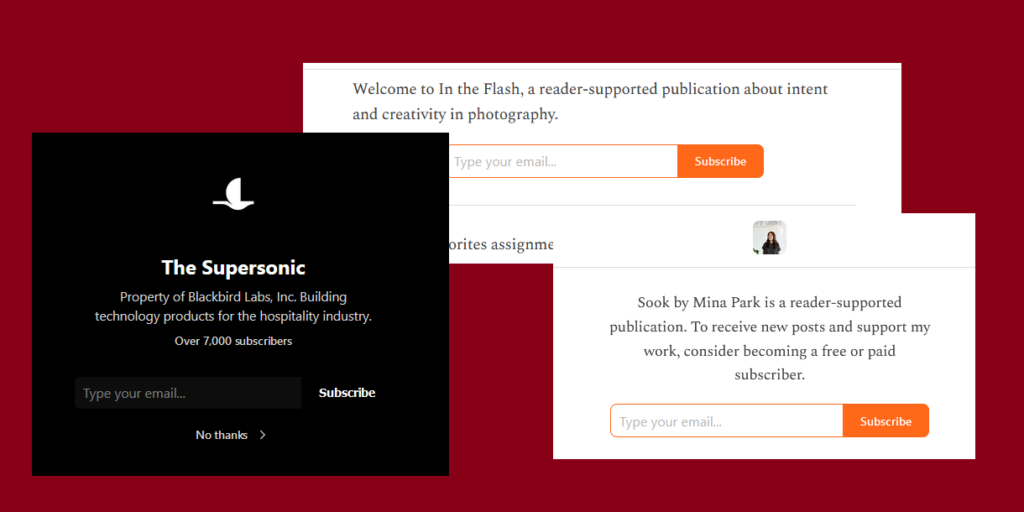
For me, at least, it explains its ongoing centrality. If you can tolerate the Nazis, go to any Substack (blog replacement) and you’ll see prompts to get emails of new posts.
Or go to Medium, another blogging platform. You can follow or you can subscribe. This is not the YouTube idea of subscribe, which is really just a Follow. This is a subscription that sends an email to your inbox.
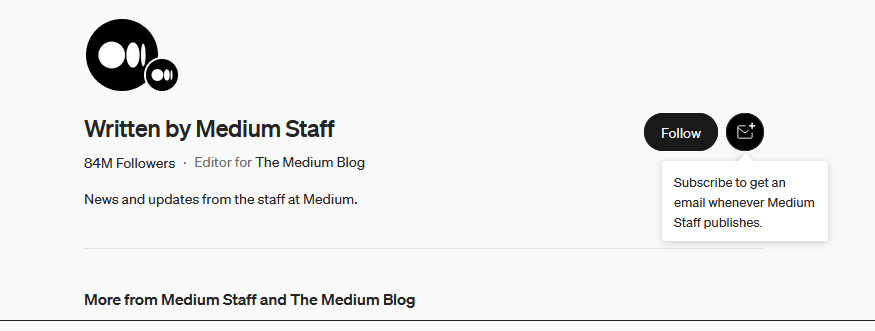
Nothing really new there except that Substack and Medium were supposed to be these new, better ways of publishing to audiences. But they are still bound to email as a way to get people’s attention. If you just follow, like on other social media platforms, you may miss things if you remain away from the platform. Email will always find you. Plus ça change.
So I wasn’t surprised when brand-new, hyper sophisticated technology media site (blog) 404 Media started asking for email addresses. They are breaking complicated technology stories and noticed that their content is being harvested. Scraped. But their business model was not to paywall, so what to do? Require an email address to access the site. Also, it means you get emails from them so you have a free subscription.
A Paywall Digression
I don’t think paywalls work for every (most) platform and so thinking of a paywall as a default doesn’t makes sense. They create information haves and have nots, which I don’t think is the goal of news media. Is it? Local news won’t survive on paywalls, which is why the emerging non-profits are focused on subscribers. They understand that some people can’t or won’t pay to access content, so it’s a matter of creating balance.
Also, for people who want to find ways around them, it’s not hard. If it’s not local news, it’s probably available in more than one place due to syndication.
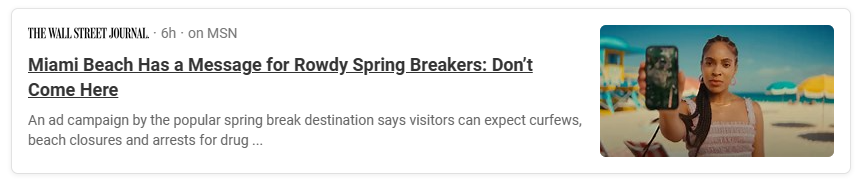
Want a paywalled Wall Street Journal article? Search for its headline on MSN.com.
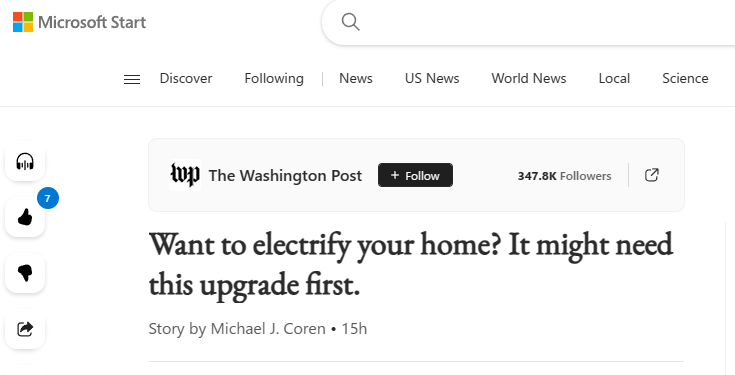
Washingtonpost.com? Check MSN.com.
Associated Press or United Press syndicates? Search just about anywhere. Most media sites, even large ones, are using a ton of syndicated content. There is almost always a way to find content around paywalls. Or, like me, you can block javascript and the other tools publishers use to implement their blocking technologies.
Libraries leverage paywalls all the time. Public libraries have library cards. They appear free but they’re taxpayer or property owner-supported. You can get access to a wealth of databases from home but you need a card to do it. This is similar to the “give us your email” strategy for content access. Subscription law libraries take this a step further and charge a specific fee for the improved access, for a premium experience. This a niche approach with a niche audience (legal professionals) that works because it’s so narrowly tailored. I think it is harder to accomplish with more generic information and a general public audience.
News Needs Email
For me, news media are one of the easiest information providers to watch. Libraries can learn a ton from them. And news media need email. Like everyone else, they want people to use their websites. Until people don’t. Then they try the app model, which is also not great. Or they pivot to podcasts. I mean. When I see this Pew Research Center data from last October, I wonder that anyone is still investing in podcasting.
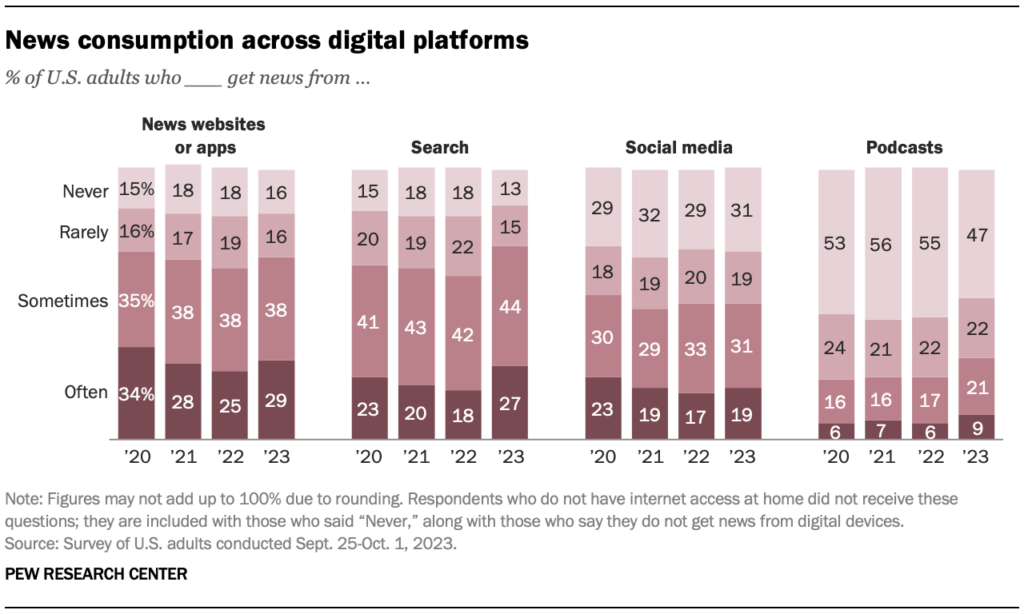
If only 1/3d of people are often getting their news from your website and your other sources are disappearing, what are you to do? Email. (Also, those Sometimes and Rarelys should be a red flag for people considering paywalls)
Why email? Pretty much everyone has one email account. Not everyone is on Facebook or X or LinkedIn or Instagram or any other single social media platform that is locked in. This report suggests Facebook has 2.9 million monthly users. This one says that there are over 4.26 billion email users. We think that social media platforms are behemoths but they pale in the shadow of email.
And email is going to matter, as the social media platforms downgrade or block news. Facebook will “deprecate” Facebook News. Google is experimenting with dropping the News tab on its search results. In countries like Canada and Australia, where governments are trying to force tech platforms to pay media companies, tech platforms are just pulling away from providing news. Facebook Threads and Instagram will no longer promote “political” content, which, although undefined, one might expect could include “news”.
How to reach readers if you can no longer reach them on social media? If they’re not leaving dumpster fire’s like Elon Musk’s X voluntarily, the content is being removed from their view by the platform itself. The answer is email. Although it’s funny to me that news media tend to call everything a newsletter even though it’s an email newsletter.
Want updates from Axios? Email. Semafor? Email. The Atlantic? Email. New York Times? Email. And on and on. Doesn’t matter if the site has a paywall or not, email is the way to get your attention, to get you to engage. Once you’ve subscribed? Then The Atlantic’s author is correct: those emails will start coming for every little thing. What about this event? What about our new subscription service? Games? Upsells? Donations?
But that’s an email management problem and most of us have tools to manage those. We can unsubscribe at the source. We can filter garbage into trash folders. We can set a rule that any email that has a CAN-SPAM-compliant footer (uses the word “unsubscribe”) is filtered out.
I am not suggesting email is the best tool. It’s the foundational tool. I prefer to follow media using RSS feeds. In fact, RSS feeds may subvert paywalls so you can read a full article on RSS even if it would be paywalled if you read it on the website. This is because news organizations remain immature in their understanding of their publishing technologies.
It’s notable to me that Google has never added improved its delivery of Google Alerts. You can set up an RSS feed or you can get an email alert (one or the other). But Alerts have never been integrated into Google Mail or any part of Workspace. They killed their RSS reader (RIP Google Reader) but I think, at the end of the day, these remain the two key information intake methods that don’t require the information gatherer to go anywhere, or visit other platforms. They can be ingested as they are received, by the gatherer.
Email is also an excellent marketing tool, one that is sorely abused although spam tools seem to have made it much less of a problem. Social media eliminated a lot of it, because, I think, there is friction created by the follower-following system. I can’t blast all people on X because I don’t follow them; they need to opt in or the algorithm needs to ensnare them. It’s just friction, though, which is why you get so many followers who are not true connections, if they are even people. Email, though, is something that people will share in order to get something useful back, and you can’t give a fake email address if you want to receive the information.
If we look at any technology on any given day, especially a work day, we are probably looking at our email. And if any technology is likely to work, it’s email. Because no one owns it. It’s a distributed network and it’s unlikely that all of it will fail, all at once. And we may wish for a world where people come to our information every day, even in a library, but the reality is we need to reach them where they are. And that’s, digitally anyway, likely to be in their email inbox.